
You’ve seen it: that little blue sticker with a lowercase “he” plastered across the jug. You might have assumed it was just another marketing gimmick—a way to make detergent sound “upgraded” or eco-friendly.
But “High Efficiency” isn’t just a buzzword. It represents a fundamental, industry-wide shift in how we wash our clothes, changing both the hardware in our laundry rooms and the chemistry in our detergent bottles.
Here is exactly what modern HE laundry means, and why ignoring that little blue logo could actually ruin your washer.
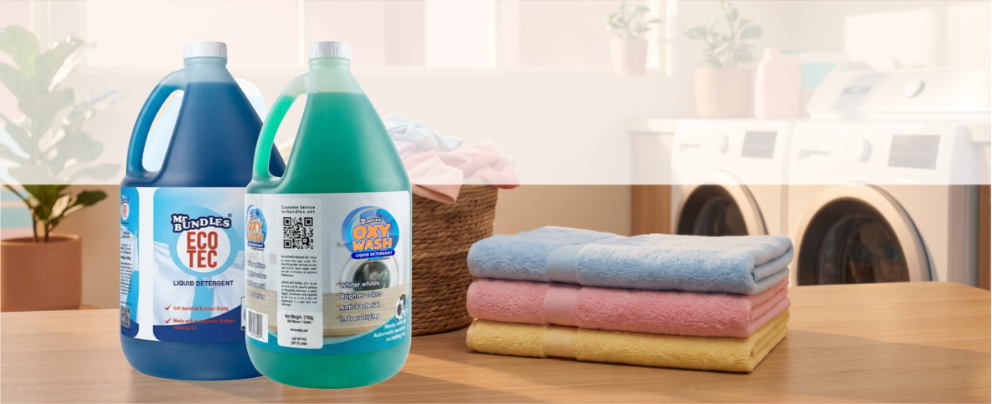
A Radical Drop in Water Consumption
Traditional washing machines operate on a simple principle: drown the clothes in a deep tub of water and use a central agitator to thrash them around until they’re clean.
HE washers are different. Instead of a deep pool, HE machines (both front-loaders and modern top-loaders) use anywhere from 20% to 66% less water. Because they can’t rely on a deep-water agitator, they clean through tumbling or spinning via impellers. The clothes lift and fall, rubbing against each other in a shallow puddle. It is this fabric-on-fabric friction that actually lifts the stains.
Because they use less water and gentler mechanics, HE machines usually take longer to run a cycle. But they make up for it by extracting vastly more water during the spin cycle, dramatically cutting down your drying time.
Bubbles are the Enemy
Since HE machines use a fraction of the water, they demand a completely different chemical approach.
If you grew up watching laundry commercials, you were probably taught that mountains of thick, white suds meant your clothes were getting super clean. In an HE machine, suds are your worst enemy.
Traditional detergents are formulated to create lots of bubbles. If you put them in an HE washer, those excessive suds act like a giant foam cushion inside the drum. This cushion prevents the clothes from rubbing against each other, completely ruining the tumbling friction the machine relies on to clean your clothes.
HE detergents are specifically engineered to be low-sudsing. They also contain specialized polymers designed to grab onto dirt and hold it in suspension. With so little water to flush the dirt away, the detergent has to work much harder to keep the grime from settling right back onto your fabric.
The Danger of “Suds Lock”
What happens if you ignore the label and pour regular detergent into an HE machine?
Modern washing machines are packed with sensors. When they detect an over-suds condition, they panic. The machine will often trigger a “suds lock,” stopping the cycle to allow the bubbles to dissipate. It will add extra rinse cycles and pull in more water to try and clear the foam, extending a 45-minute wash into a 2-hour ordeal.
Over time, using non-HE detergent in a high-efficiency machine will leave a scummy residue inside the drum and hoses, leading to mold, foul odors, and eventually, mechanical failure.
Use H.E. Detergents
If your washing machine is relatively new, it almost certainly requires HE detergent to function properly. The good news is that the standard is universal—you don’t need a specific brand, just a detergent formulated for low-water environments.
Using the right chemistry means faster rinse cycles, a cleaner machine, and clothes that actually get washed instead of just taking a bubble bath.
Category: Detergents
-
MrBundles Liquid Detergent
Original price was: ₱249.00.₱218.00Current price is: ₱218.00. -
MrBundles Liquid Detergent | Refill Pack
Original price was: ₱139.00.₱129.00Current price is: ₱129.00. -
OXY Wash Detergent in Refill Pack (2 KG)
Original price was: ₱139.00.₱129.00Current price is: ₱129.00. -
OXY Wash Liquid Detergent
Original price was: ₱249.00.₱218.00Current price is: ₱218.00. -
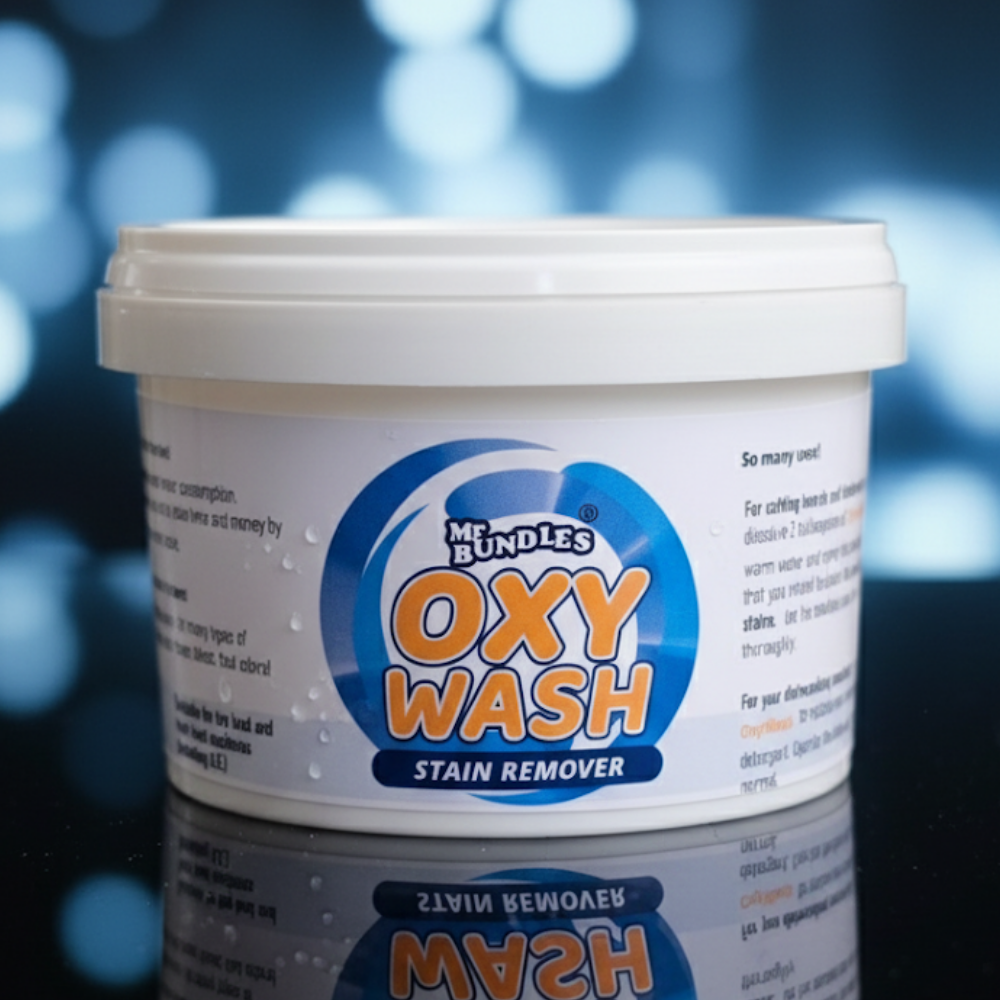
OxyWash Stain Remover 500 GRAMS
Original price was: ₱239.00.₱227.00Current price is: ₱227.00.

Categories
- Bath & Body2 products
- Dishwashing Liquid2 products
- Hair Grower Solution2 products
- Home1 product
- Household Disinfectants2 products
- Insect Repellents3 products
- Laundry5 products
- Liquid Detergent4 products
- Multipurpose Cleaner2 products
- Powder Detergent1 product
Leave a Reply